




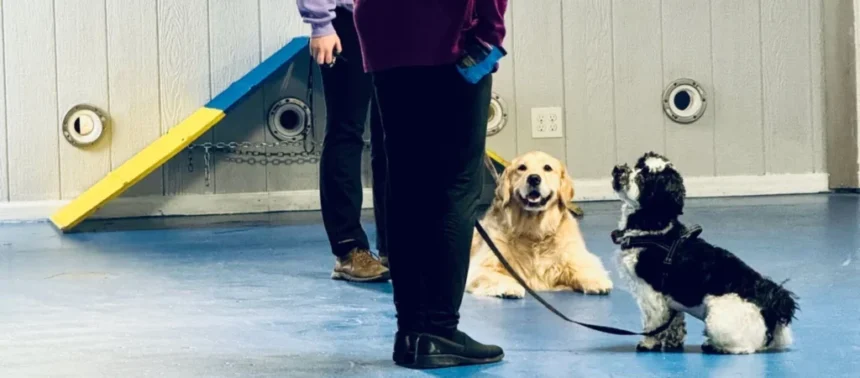

A dog daycare allows pets to socialize in controlled settings that are overseen by staff. Pets spend time together in designated playrooms, and they can participate in group play. Dogs are placed in specific rooms based on size and temperate, allowing them to have a productive socializing environment. Here is more information on how a dog daycare helps with socialization between pets:
Group Placement
Some dog daycare requires animals to complete registration, including a mandatory temperament trial, so staff can observe behavior and determine placement. This evaluation helps the facility understand each dog’s personality and interaction style before assigning them to a group. Pets with high energy are often placed together, while those with a calmer demeanor are grouped separately. This helps prevent mixed temperaments that interfere with safe interactions.
Size and weight guide assignments. A dog daycare may include two play environments: one for small dogs and the other for larger pets. This groups animals by similar physical size to help prevent disproportionate play within groups. The facility monitors comfort levels and places each dog in an environment that supports secure, positive interactions.
Playrooms should be overseen by well-trained staff who are certified in canine first aid, body language, and behavior. The goal is to create a structured environment where pets can safely interact and rest throughout the entire day. The team observes how the dogs bond with each other, and they may adjust group placements to maximize social experiences.
Daily Activities
Dogs get supervised social times during daily play sessions. Some dogs join the energetic group play, while others may choose to rest in the quieter spots of the room. Pets may experience repeated opportunities to interact with familiar group members; this supports routine-based social connections within structured environments. Rest breaks and quiet downtime in the playrooms help prevent the dogs from being overstimulated while maintaining their steady exposure to social cues.
Dogs share time in structured settings and move through the social rhythm of play, observation, and rest. This cycle helps maintain stable energy levels within groups, and it supports appropriate communication between dogs with different temperaments and play styles. Staff members may alter the environment to create a safer social experience during dog play.
Playroom Design
Some dog care centers operate without kennels, enabling pets to move from activity areas to resting areas on their own. Pets interact in climate-controlled indoor environments, and facilities use HVAC and air purification systems throughout shared rooms. This helps provide a comfortable environment as dogs socialize. Facilities may include cubbies or partially enclosed sections that are located in the playroom; this allows pets to rest in a cubby whenever they choose. Some facilities provide beds and blankets to allow dogs to rest comfortably between activity sessions. While rest areas separate canines from playroom activity for a period, socialization remains part of the overall daycare setting.
Explore a Dog Daycare
Socialization in dog daycare operates through structured group placement based on size, weight, and temperament. Pets interact within assigned playrooms, and these interactions shape how groups function throughout the day. The facility provides designated spaces where your dog can spend time with others and organizes activities within defined environments. Contact a dog daycare facility to learn more about canine social interaction.