




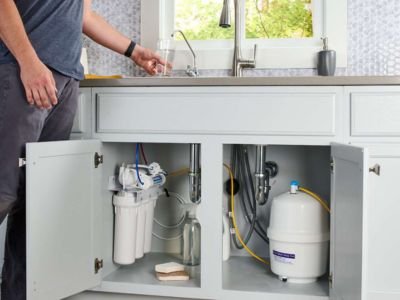

Your home’s water supply may contain impurities that impact the taste, odor, and overall quality of your drinking water. Installing a water filtration system helps reduce these contaminants before the water enters your home. Depending on your specific water treatment needs, you can choose between a whole-house water filter system and an under-sink filtration unit. Here is more information on the key differences between these two options:
Compare Coverage
Whole-house filtration systems treat water as it enters your home, providing filtered water throughout the plumbing system before it reaches faucets and appliances. Under-sink systems treat water at a single location, typically the kitchen sink, where they provide filtered water for specific uses. Your household’s water usage patterns play a key role in determining which filtration option fits your needs.
A whole-house water filter system supplies treated water for activities such as bathing, laundry, cooking, and cleaning. An under-sink system focuses on improving the water quality used for drinking and food preparation. Choosing the right filtration system starts with understanding your household’s water requirements. Factors such as household size, daily water consumption, and the areas where you use filtered water help identify the most suitable option.
Select System Features
Water filtration systems include a variety of features designed for different household water conditions. Water softeners reduce minerals that contribute to scale buildup on plumbing fixtures and appliances, while filtration systems address other water treatment needs based on their design. The right combination of filtration features depends on factors such as household size, water quality, and daily water usage. System capacity varies according to the amount of water your household uses; selecting an appropriately sized system helps match treatment needs with your routine. A properly selected water filtration system fits your home’s water conditions and usage requirements.
Evaluate Filtration
Each type of filtration technology targets specific contaminants in a water supply before the water is used. Some filtration systems reduce chlorine, which affects taste and odor, while sediment filters capture particles such as dirt, sand, and rust. Reverse osmosis (RO) systems provide additional treatment for drinking water by reducing many dissolved substances.
A water quality report provides information about the contaminants present in your water supply and helps identify suitable filtration options. Different filtration systems are designed to address specific water treatment needs based on the characteristics of the water source. Here are a few common filtration technologies:
- Sediment removal: Captures particles such as sand, dirt, and rust before they enter your plumbing system.
- Chlorine reduction: Reduces chlorine levels to improve water taste and odor.
- Reverse osmosis: Uses a membrane-based process to reduce a wide range of dissolved substances in drinking water.
Learn More About Water Filter System
Comparing whole-house and under-sink filtration systems helps match water treatment with your household needs. Coverage, filtration methods, maintenance requirements, and system features also influence the type of unit you choose. Understanding these differences also helps you select a water filter system that supports your daily water use. Contact a water treatment professional today to learn which water purification system best fits your home.